
Choosing Basins and Countertops
The basin and countertop shape the first impression of a bathroom vanity, but appearance is only half the decision. Depth affects drawers, tap holes affect installation and material affects both handling and care. For a wholesale or project order, the safest approach is to approve the cabinet, top and basin as one coordinated specification.
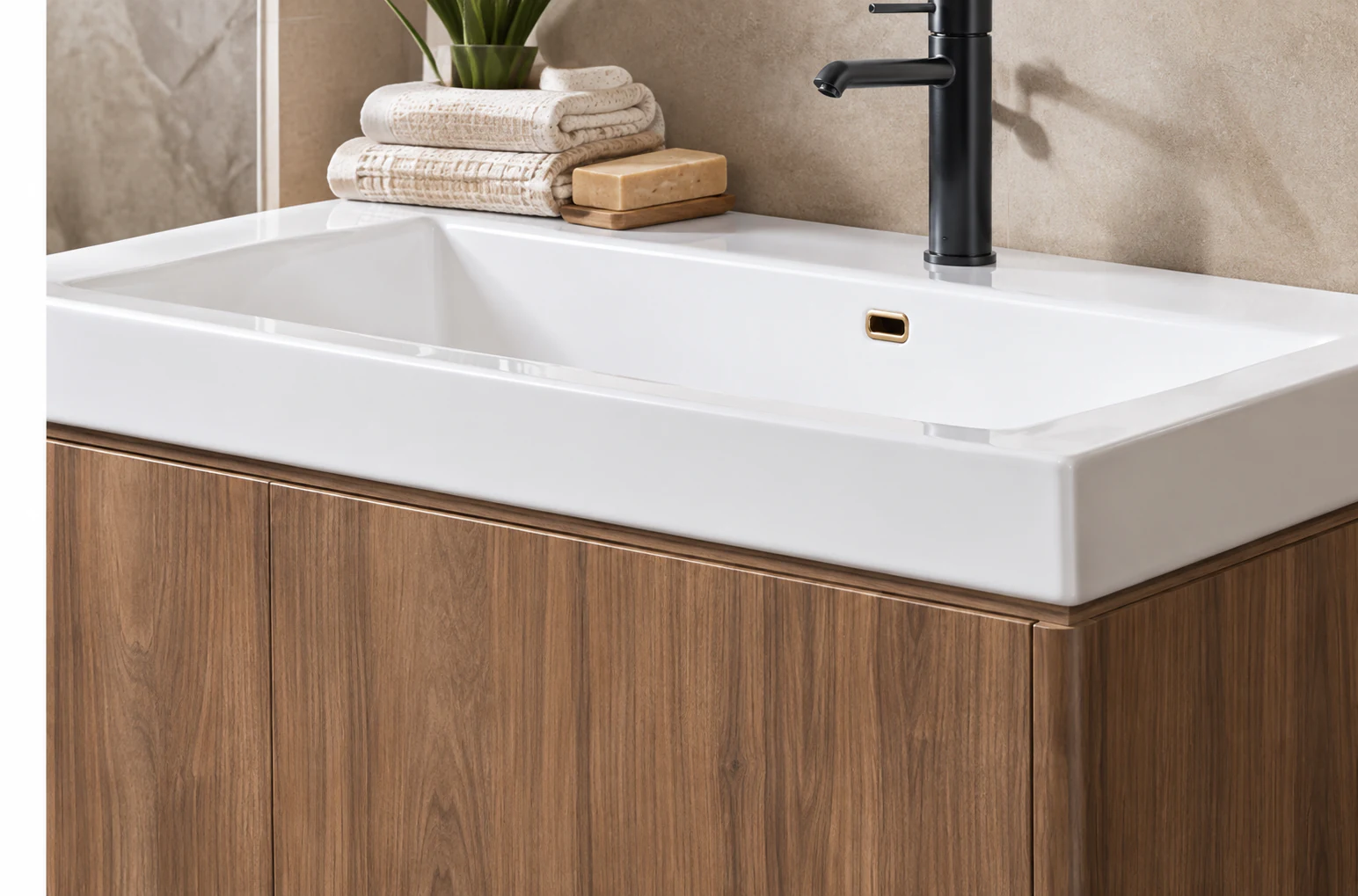
Begin with how the bathroom will be used
A hotel guestroom, family apartment and premium retail display do not ask the same things of a vanity top. Repeated projects often value easy cleaning and consistent replacement. Retail collections may need stronger visual variety. Compact bathrooms place more pressure on basin depth, usable counter space and drawer clearance.
Write down the practical priority before choosing a material: seamless cleaning, repairability, premium appearance, compact size or price. This keeps the specification anchored when attractive samples begin to compete for attention.
Compare common basin configurations
An integrated ceramic basin gives a clean, familiar solution with few joints around the bowl. Undermount basins leave a continuous countertop surface and suit quartz or sintered stone, but the cut-out, adhesive and support must be accurate. Countertop vessels create a strong visual feature and preserve space below in some designs, although overall height and splash control need attention.
Ask about bowl depth, internal shape, overflow, waste opening and tap-hole arrangement. A basin that looks generous from above can project deeply into the cabinet and interfere with the top drawer or trap. Review a section drawing when the storage layout is tight.
Choose countertop material with handling in mind
Ceramic is widely understood, easy to clean and practical for repeated vanity packages. Quartz offers a solid, refined surface and a broad colour direction. Sintered stone can provide slim profiles and convincing stone effects. Each option has its own weight, edge treatment, cut-out and packing requirements.
Do not approve a material from colour alone. Confirm thickness, edge profile, surface sheen and the appearance of any visible cut edge. For patterned tops, agree what level of vein variation is acceptable; natural-looking variation should not become a surprise during batch inspection.
Check the dimensions people tend to miss
Record the finished width and depth of the top separately from the cabinet dimensions. Confirm overhangs, backsplash or upstand, basin centreline, tap-hole diameter, distance to the wall and drain position. If the vanity sits between finished walls, establish a realistic installation tolerance instead of assuming a nominal width will fit perfectly.
The cabinet must support the chosen top and leave access for the intended plumbing. Coordinate these details with the process described in confirming top cut-outs and basin compatibility.
Approve packing and installation together
Ask whether the top and basin will ship fitted, nested or in separate cartons. A pre-assembled unit may simplify site work but changes handling and damage risk; separate packing can protect fragile pieces but requires clear matching labels and installation guidance.
Before production, approve the drawing and a physical sample where practical. The final document should show the exact basin, top, cabinet and hardware combination. That single reference is far more dependable than separate catalog images gathered from different model families.
Frequently Asked Questions
Which basin type is easiest to clean?
Integrated ceramic basins are often chosen for simple cleaning because the bowl and surrounding deck form one piece, though suitability still depends on the project and design.
Should countertop dimensions match cabinet dimensions?
Not necessarily. Tops may include front or side overhangs. Confirm the finished top dimensions separately from the cabinet size.
What should be checked below the basin?
Review basin depth, drain and trap position, drawer movement, shelf clearance and any reinforcement or support required by the top.
Can quartz or sintered stone tops ship with the cabinet?
They can be supplied according to the selected model, but assembly and packing method should be agreed because weight and fragility affect handling.
Why approve a section drawing?
A section drawing reveals vertical relationships that a front view cannot, including bowl depth, drawer clearance, countertop thickness and plumbing space.
Browse GOGO vanity configurations or send your cabinet size, basin preference and plumbing requirements through Contact Us.