
Plywood, PVC or MDF: Comparing Cabinet Materials
“Is plywood better than MDF?” sounds like a simple buying question, but it rarely has a useful one-word answer. A bathroom vanity is a finished system: the substrate, face finish, edge treatment, hardware fixing and basin area all work together. Buyers get a clearer comparison when they review the complete cabinet construction instead of selecting from a material label alone.
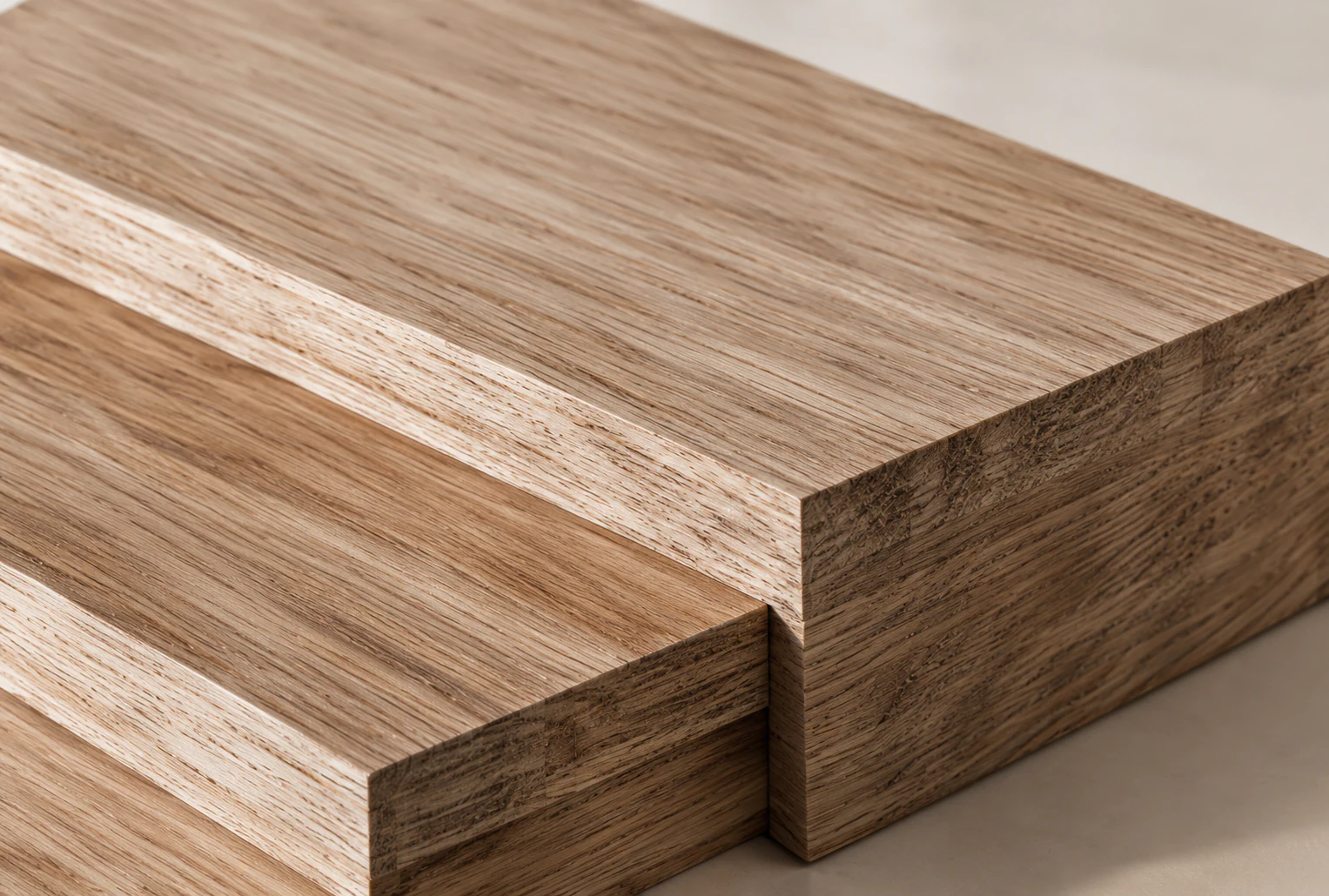
Plywood: strong fixings and practical versatility
Plywood is built from cross-laminated veneers. Its layered construction generally gives screws and mounting hardware a dependable hold, which is useful for wall-mounted cabinets and drawer runners. It is often specified for mid- to upper-range vanities where the buyer wants a good balance of strength, weight and finish options.
Not all plywood is the same. Veneer species, ply count, adhesive, core gaps and face grade can vary. Ask the supplier to identify the board thickness and show a cut edge or construction sample. Pay particular attention to drilled openings, the bottom edge and the area around plumbing cut-outs, because exposed or poorly sealed edges can still take on moisture.
PVC: useful where water exposure is the main concern
PVC foam board does not absorb water in the way wood-fibre boards do, so it can be a sensible choice for compact bathrooms, rental properties and coastal markets where buyers put moisture resistance high on the list. It is also relatively easy to clean and can be finished in a range of colours.
The trade-off is feel and structural behaviour. Board density, screw holding and reinforcement matter, especially on wide doors, heavy drawers and wall-hung models. A good PVC specification should explain where reinforcement is used and how hinges, runners and mounting brackets are fixed. Judging the cabinet from a small colour chip will not answer those questions.
MDF: a smooth, consistent base for painted finishes
MDF has a uniform surface that machines cleanly, making it well suited to routed fronts, painted colours and designs where a smooth finish is important. It can deliver a refined appearance at a practical price point, which is why it remains common in retail vanity ranges.
Its weak point is prolonged water entry. Moisture-resistant grades improve performance, but they do not make careless construction waterproof. The coating must be continuous, and edges, handle holes and cut-outs need proper sealing. For a painted MDF cabinet, inspect corners and profiles as closely as the flat front; those are the areas where finish quality is easiest to see.
Do not compare unlike specifications
A well-made moisture-resistant MDF cabinet may be a better buy than low-grade plywood with open core gaps, just as a reinforced PVC cabinet may suit one model but not another. Compare equivalent cabinet sizes, finishes and hardware rather than treating the substrate name as a quality grade.
Five details to confirm before you approve a material
Ask for the substrate and thickness of the carcass, doors, drawer fronts and back panel; they do not always use the same construction. Then confirm the surface finish, edge-sealing method, hardware fixing and treatment around basin or plumbing openings. If formal emission or market-specific compliance documents are required, state the exact destination standard in the enquiry rather than assuming one certificate fits every country.
For a bulk order, request a complete corner sample or finished cabinet sample. Open the drawers, examine an internal cut-out and look beneath the basin area. This modest inspection tells you far more than a loose board swatch. Keep the approved construction reference with the purchase specification and use it again during pre-shipment quality checks.
Which cabinet material should you choose?
Choose around the model, price position and conditions of use. Plywood is a versatile option when structural strength and reliable fixings matter. PVC is worth considering when water exposure is the overriding concern. MDF is effective for smooth painted or routed fronts when the finish and edge protection are properly executed.
Many successful collections use more than one material. The important step is to record exactly where each substrate is used and how it is protected. That turns a vague material preference into a specification a factory can quote, sample and reproduce.
Frequently Asked Questions
Is plywood always better than MDF for a bathroom vanity?
No. Board grade, finish, edge sealing and cabinet construction all matter. A well-specified MDF cabinet can be appropriate for painted designs, while plywood is often preferred where stronger fixings are important.
Are PVC bathroom cabinets completely waterproof?
PVC board itself does not absorb water like wood-fibre board, but the finished cabinet still includes joints, hardware and fixing points that require sound design and workmanship.
What sample should a wholesale buyer request?
Ask for a finished cabinet sample or a construction sample that shows the substrate, surface coating, edge treatment and hardware fixing, not only a decorative colour chip.
Can one bathroom vanity use several materials?
Yes. Carcasses, fronts, back panels and internal components may use different substrates. Each component should be identified in the approved specification.
What matters most in humid bathrooms?
Material choice matters, but so do ventilation, edge sealing, plumbing installation and preventing standing water from remaining on or inside the cabinet.
Compare construction options in GOGO OEM & ODM, or send your target market, price position and preferred finish through Contact Us for a material discussion.