
What to Include in an OEM Brief
A useful OEM brief does not need to be long. It needs to remove the expensive ambiguities. Buyers often send a mood board, a target price and a logo, then discover that both sides made different assumptions about dimensions, materials or packing. A structured brief gives the factory enough context to quote the intended product and flag decisions that are still open.
Explain the market and commercial goal
Begin with the destination country, sales channel and customer position. A vanity for a builder package is specified differently from one for a design-led ecommerce brand. Include the intended retail or project segment, target order timing and any market-specific documents or performance requirements you expect the supplier to address.
If price is a constraint, state a realistic target range and the trade terms behind it. A bare target number without size, basin, packaging or Incoterm context can push the discussion in the wrong direction.
Define the product, then mark what can change
For each model, provide a reference image or supplier model code, nominal width, installation type, storage layout, basin and mirror combination. Add estimated quantities by size and finish. If a feature is essential—such as two drawers, a centred basin or a wall-mounted installation—label it as fixed.
Mark flexible areas just as clearly. You may accept an alternative handle, internal board or countertop thickness if it protects the price and keeps the appearance. Telling the manufacturer where it may propose options usually produces a better first quotation than forcing guesses.
Use one status for each decision
A simple “required / preferred / open to proposal” column works well. It prevents an early design idea from being mistaken for a final instruction and helps the quotation team focus on genuine decision points.
Specify materials and finishes in buildable terms
Name the required cabinet substrate where it is known, but also describe the finish, sheen, edge appearance and visible internal colour. Attach physical or named colour references when possible. Screen images are useful for direction, not final colour approval.
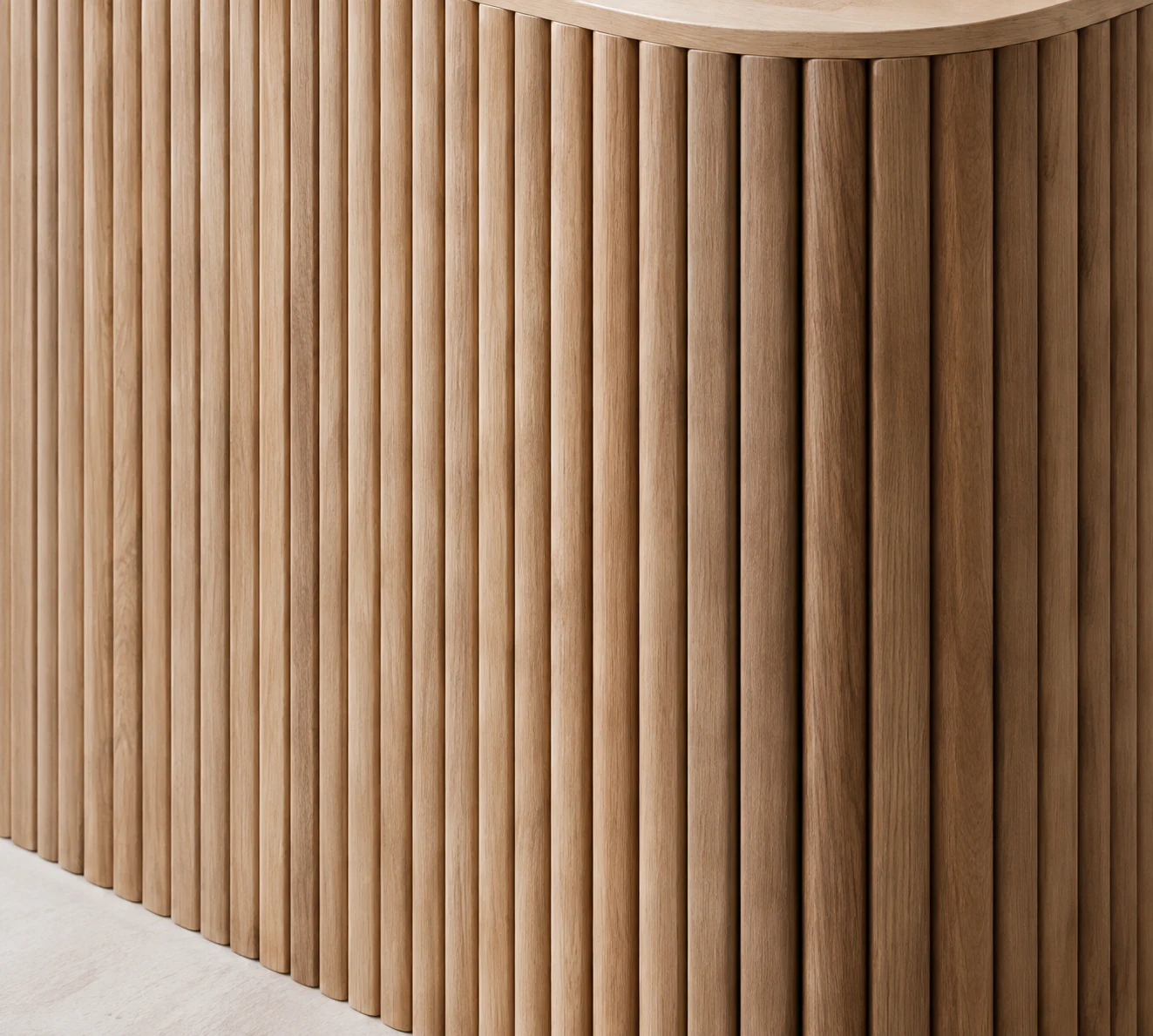
If the design includes fluting, routed panels or curved fronts, provide close-up references and state whether the pattern must continue across doors and drawers. Read Approving a Cabinet Finish Sample before setting the sign-off process.
Provide usable brand and packaging files
Identify every brand location: cabinet badge, hardware, mirror, rating label, instruction sheet and outer carton. Supply vector logo artwork where available, note the required colour and size, and keep clear space around the mark. Low-resolution screenshots create unnecessary redrawing and approval rounds.
For cartons, state shipping marks, barcode format, model naming, country-of-origin text and any handling icons. Clarify whether your team supplies finished artwork or expects the factory to prepare a layout for approval. Packaging should be developed around the actual product, not treated as decoration added at the end.
Finish the brief with approvals and ownership
List the samples and documents that must be approved: technical drawing, finish chip, logo method, product sample, carton artwork and packing sample. Name the person authorized to approve each item and establish how revisions will be recorded. Version numbers and dates are simple safeguards when several teams are involved.
Finally, include estimated quantities, preferred container arrangement, delivery destination and required timing. The brief can still contain open questions; it just should not hide them. A clear list of unresolved decisions is something both buyer and manufacturer can work through.
Frequently Asked Questions
What is the minimum information for a bathroom vanity OEM enquiry?
Share the market, model references, sizes, quantities, material or finish direction, basin combination, branding needs, packaging expectations and delivery destination.
Should an OEM brief include a target price?
It can, provided the size, configuration, quantity, packaging and trade basis are also clear enough for a meaningful comparison.
What logo file should I send?
Vector artwork such as AI, EPS, SVG or a print-ready PDF is preferable because it can be scaled without losing quality.
Do all details need to be final before requesting a quotation?
No. Mark which requirements are fixed, preferred or open to proposal so the supplier can quote while highlighting remaining decisions.
Which items usually need physical sample approval?
Colour and finish are best approved physically. Depending on the project, a complete product sample and packaging sample may also be appropriate.
Use this checklist to prepare your enquiry, then share it with the GOGO team through Contact Us or review available customization under OEM & ODM.